LION&LAND

Thailand

Lifestyle-first ownership with long-stay and LTR orientation

Thailand is best positioned as a lifestyle and long-stay market where selected ownership strategies may connect with LTR or other long-stay visa planning, depending on buyer profile.

Region
Southeast Asia
Residency pathway
Long-stay & LTR-oriented
Indicative entry
From THB 3,000,000 *
Family inclusion
Profile-dependent, subject to review
Typical buyer
Lifestyle buyers & semi-retirees
Legal review
Required

Thailand is not a 'buy property, get residency' market, and we will never present it as one. It is one of the world's great lifestyle markets: resort-grade property, exceptional healthcare hubs, and a deep hospitality economy. For the right profile, remote professionals, semi-retirees, wealthy long-stay planners, selected ownership strategies can sit alongside LTR or other long-stay visa planning. The visa logic and the property logic are related, but separate, and both deserve proper review.

Thailand

Long-stay & LTR-oriented

What this pathway may support

Long-stay living arrangements built on visa categories such as the LTR program, which have their own financial and personal criteria, property ownership alone does not qualify, but may form part of a broader eligible profile.

Who it may fit

Remote professionals, semi-retirees and lifestyle buyers with income or assets that plausibly meet a long-stay category, who want a base in Thailand either way.

What must be checked

Which visa category (if any) fits your profile, current LTR criteria, foreign ownership structures (freehold condominium quota vs. other forms), currency transfer documentation and tax residence implications.

Where legal partners come in

A licensed Thai legal partner reviews visa eligibility separately from the property purchase, and verifies the ownership structure of any project before reservation. We keep the two tracks coordinated but distinct.

Legal review required

Residency routes

Which route the property can actually serve

Property does not grant residency anywhere. What it can do is satisfy the investment condition of a specific route. These are the routes that exist in this market, what each one asks for, and what each one does not give you.

Property can satisfy this

LTR, Wealthy Pensioner

Qualifying amount
USD 250,000 in qualifying Thai assets, with income conditions
Duration
10 years, issued as 5 plus 5

Age 50 or older with annual passive income of at least USD 80,000, or income of USD 40,000 to 80,000 combined with USD 250,000 invested in qualifying Thai assets, which can include property. Carries the same foreign-income tax exemption and annual reporting as the other LTR categories.

What it does not do

Age-gated, and the income test is not optional at the lower investment level. Passive income has to be evidenced, not asserted.

Fits: Retirees over 50 with steady passive income who want the tax treatment

Board of Investment, official LTR programme

Read the analysis
Property can satisfy this

LTR, Wealthy Global Citizen

Qualifying amount
USD 500,000 investment, alongside USD 1,000,000 net worth
Duration
10 years, issued as 5 plus 5

Thai property counts toward the USD 500,000 investment, so the purchase and the qualification can be the same decision. A February 2025 reform removed the previous USD 80,000 annual income requirement from this category entirely. Holders are exempt from Thai personal income tax on foreign-sourced income and report annually rather than every 90 days.

What it does not do

The net worth test sits alongside the investment and is assessed separately. This is a Board of Investment framework, not the developer-facing route, and its evidence standards are stricter.

Fits: Internationally mobile buyers whose balance sheet already clears the net worth test

Board of Investment, official LTR programme

Read the analysis
Property can satisfy this

Property-linked long-stay route

Qualifying amount
From THB 3,000,000
Duration
90 days initially, then extensions of roughly 12 to 15 months, renewable annually

Built on a condominium purchase of at least THB 3,000,000, a qualifying leasehold above that value, or a rental of at least THB 85,000 per month. No age limit and no income proof, which is why developers promote it.

What it does not do

It carries no right to work in Thailand, and it is not permanent residence. As of early 2026 the implementing regulations were still being finalised, so the filing standard should be confirmed before you commit.

Fits: Buyers and pre-retirees who want long-stay rights tied to an asset they intend to hold

Thailand Longstay Company and Sansiri programme materials

Read the analysis

Property can satisfy this

Investor route at THB 10,000,000

Qualifying amount
THB 10,000,000, spreadable across assets
Duration
Reported as annually renewable

Secondary sources describe a higher-threshold investor route at THB 10,000,000 that can be spread across property, bank deposits and bonds, and that is said to run with fewer special approvals than the lower route.

What it does not do

We hold no primary-source analysis of this route. It is listed because it comes up in buyer research, not because we can stand behind the detail yet.

Fits: To be established, once the route is verified

Not yet verified against a primary source. Treat as a lead to check, not as a figure to plan on.

Secondary legal commentary

Not property-linked

Retirement route, O-A and O-X

Qualifying amount
THB 800,000 on deposit, or THB 65,000 monthly income
Duration
One year at a time on the O-A; the O-X runs longer

The traditional age-based route for applicants over 50. Health insurance from an insurer approved by the Office of Insurance Commission is required, with minimum cover of THB 40,000 outpatient and THB 400,000 inpatient. The O-X allows longer stays but is open to 14 nationalities only.

What it does not do

Not property-linked at all. Holders who become Thai tax resident by spending 180 days or more are inside the Section 41 remittance rules, unlike LTR holders.

Fits: Retirees over 50 whose plan does not depend on a property qualifying anything

Thai Immigration Bureau criteria for the O-A route

Read the analysis
Not property-linked

Thailand Privilege, formerly Elite

Qualifying amount
From THB 900,000 as a membership fee
Duration
5 to 20 years depending on tier

A purchased membership rather than an investment route. The five-year tier starts around THB 900,000 and the ten-year tier around THB 1.5 million. Simplest to qualify for, because there is no financial test beyond paying.

What it does not do

The fee buys convenience, not an asset and not the LTR tax exemption. Property does not count toward it, although some partner developers attach conditions.

Fits: Buyers who want length and simplicity and do not need the property to do double duty

Thailand Privilege Card Co. published tariffs

Read the analysis

Figures as published by the named authority. Whether an application succeeds depends on title type, documentation, filing path and your own profile, and is decided by the authorities. We coordinate the property side and work with licensed legal partners on the rest.

What kind of projects fit this strategy

Not every listing serves a residency-oriented purchase. In this market we look for:

  1. Freehold condominium quota verified before reservation

  2. Resort-grade developers with delivery history

  3. Locations with year-round rental demand, not just high season

  4. Professional rental management on site

  5. Clean currency-transfer documentation (FET) practice

  6. Realistic exit logic in a market driven by international demand

Key market data

Figures as published by the named source. They are a starting point for a conversation, not legal or tax advice.

Condo Price (Bangkok Prime)
THB 150,000 - 350,000 per sqm (USD 4,200 - 9,800)
Source: CBRE Thailand Q4 2025
Gross Rental Yield (Bangkok Condo)
5 - 7% in prime locations
Source: Knight Frank Thailand 2025
Foreign Ownership
Freehold condos (max 49% foreign quota per building), leasehold for land/villas
Source: Thai Condominium Act
Tourism Arrivals (2025)
Approximately 33 million international visitors (2025)
Source: Tourism Authority of Thailand, 2025 actuals
Thailand Elite Visa
THB 650,000 - 5,000,000 for 5-20 year membership
Source: Thailand Privilege Card Co., 2025/2026 tariffs
Annual Price Growth (Bangkok)
3 - 6% in prime segments (2024)
Source: Bank of Thailand / CBRE

Where the money actually goes

Districts behave differently enough that a market-level average tells you almost nothing. This is the level at which the decision is actually made.

Mature Market, Selective Entry Required

Bangkok

Prime condominiums, luxury apartments, branded residences

Price range
THB 200,000 - 400,000 per sqm (USD 5,600 - 11,200)
Gross rental yield
5 - 7%
Capital appreciation
3 - 6% annually in prime segments
Residency relevance
Property-linked long-stay route from THB 3,000,000; the deepest supply of qualifying condominium stock
Fits which buyer
City-focused investor seeking yield plus capital growth. Professionals and founders wanting a Bangkok base. Portfolio diversifiers adding Asian capital city exposure
Key risk
Oversupply in lower segments. Foreign quota saturation in popular buildings. Traffic and infrastructure challenges in some areas

Lifestyle Play, Supply Headwinds

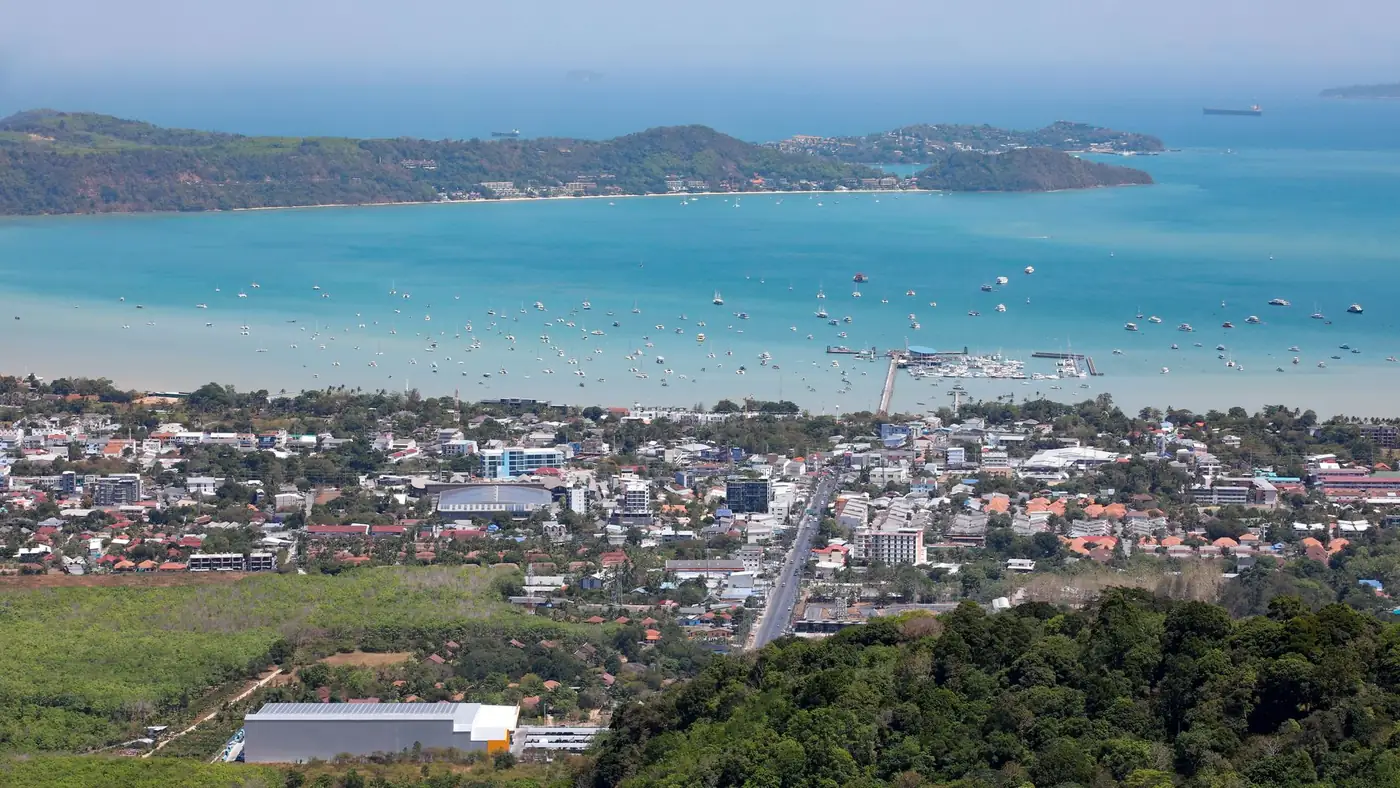
Phuket

Resort condos, pool villas (leasehold), managed holiday properties

Price range
THB 80,000 - 250,000 per sqm (USD 2,200 - 7,000)
Gross rental yield
6 - 8% (managed resort properties)
Capital appreciation
4 - 7% in prime west coast locations
Residency relevance
Property-linked long-stay route from THB 3,000,000; qualifying stock in both condominium and villa leasehold form
Fits which buyer
Income-focused investor targeting tourism yields. Lifestyle buyer wanting personal use with rental income. Retirement buyer seeking tropical island base with established international community
Key risk
Seasonal occupancy variance. Leasehold complexity for villas. Quality variance between developers. Distance from Bangkok for management oversight
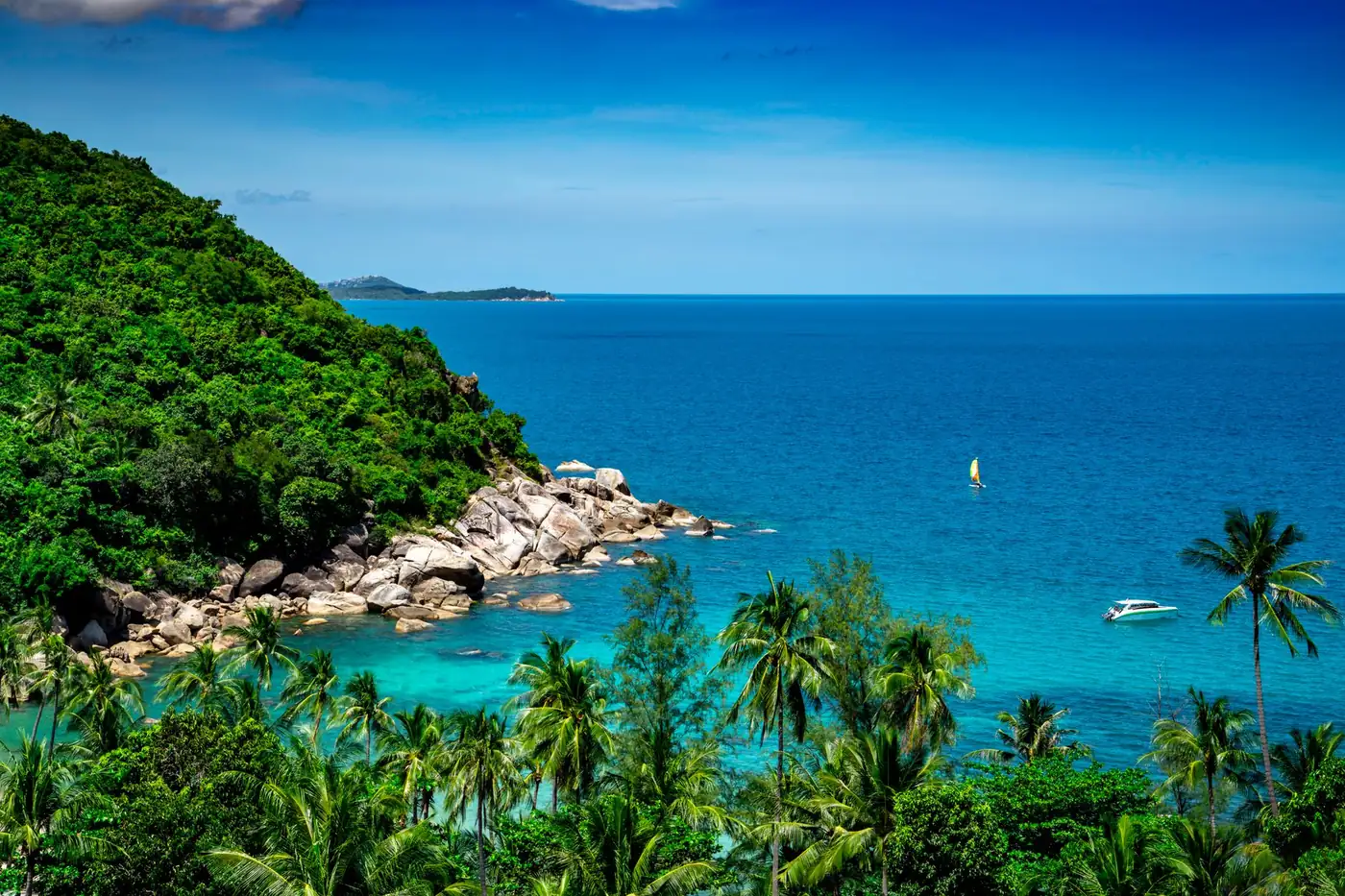
A rocky tropical cove with palms above clear water

Value Alternative, Infrastructure Dependent

Koh Samui

Luxury villas (leasehold), boutique condos, managed resort properties

Price range
THB 60,000 - 200,000 per sqm (USD 1,700 - 5,600)
Gross rental yield
5 - 7% (highly seasonal)
Capital appreciation
3 - 5% in established areas
Residency relevance
Property-linked long-stay route from THB 3,000,000; thinner qualifying supply, verify title form early
Fits which buyer
Lifestyle-first buyer seeking island living with boutique character. Long-stay buyer wanting a quieter alternative to Phuket. Retirement buyer attracted to smaller, more personal community
Key risk
Higher seasonality than Phuket. More limited resale market. Infrastructure less developed. Fewer quality developer options. Leasehold structures dominant

Digital Nomad Play, Low Capital Growth

Chiang Mai

Condominiums, serviced apartments, co-living developments

Price range
THB 40,000 - 120,000 per sqm (USD 1,100 - 3,400)
Gross rental yield
4 - 6% (long-term rental focused)
Capital appreciation
2 - 4% annually
Residency relevance
Property-linked long-stay route from THB 3,000,000; qualifying stock available well below Bangkok pricing
Fits which buyer
Digital nomad or remote worker wanting an affordable base. Retirement buyer seeking low cost of living with mountain lifestyle. Value investor targeting lowest entry prices in quality Thai markets
Key risk
Smaller and less liquid market. Lower capital appreciation than Bangkok or Phuket. Seasonal air quality issues (burning season). More limited international buyer pool for resale
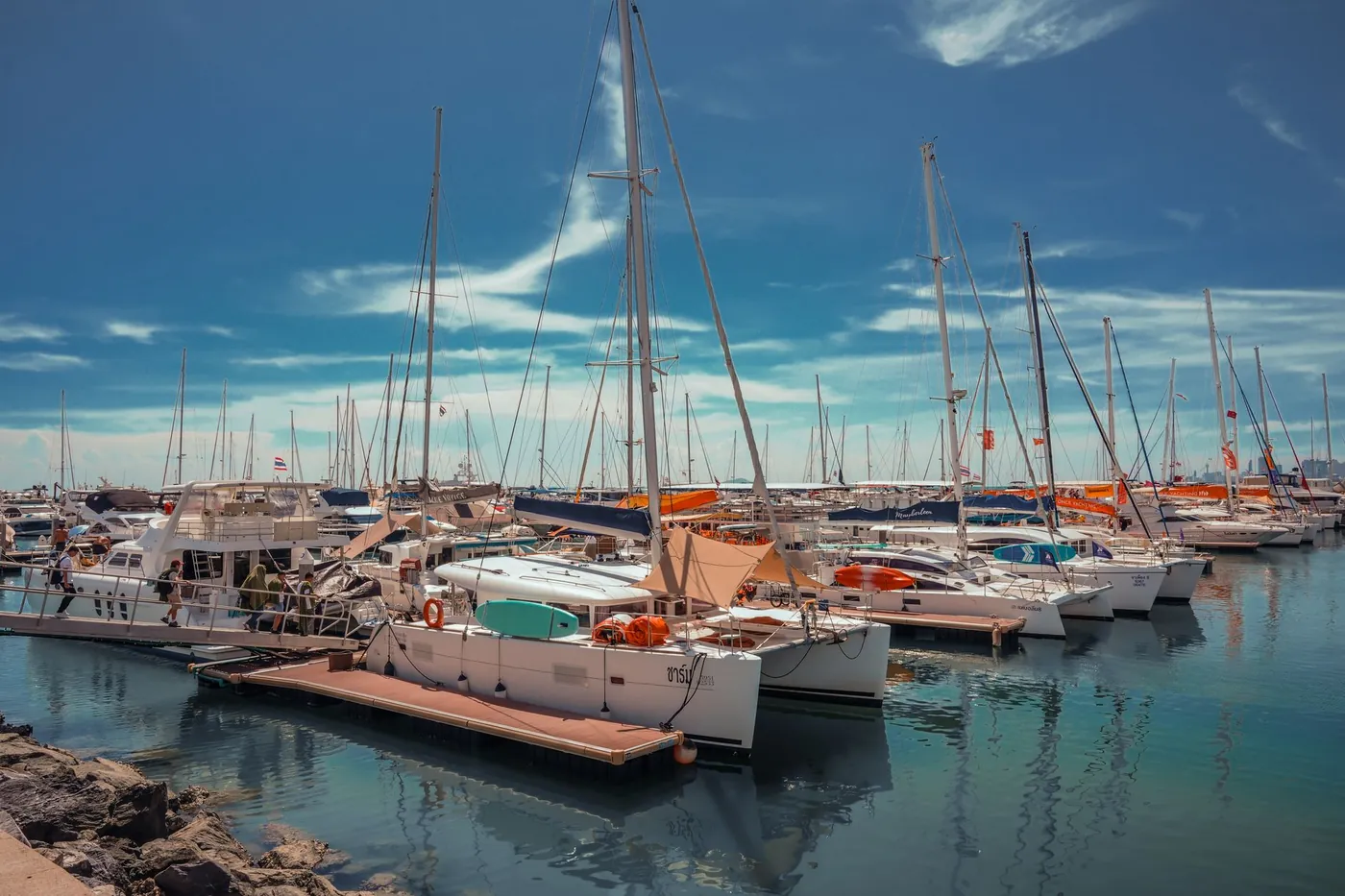
Yachts and catamarans in a Thai marina, a city skyline on the horizon

Yield Anchor, Buyer Concentration Risk

Pattaya

Beachfront condos, resort apartments, managed pool villas

Price range
THB 50,000 - 150,000 per sqm (USD 1,400 - 4,200)
Gross rental yield
5 - 7% in quality segments
Capital appreciation
2 - 4% (segment dependent)
Residency relevance
Property-linked long-stay route from THB 3,000,000; wide quality spread, building selection decides the case
Fits which buyer
Budget-conscious investor seeking beach market yields. Short-trip buyer wanting easy access from Bangkok (90 min drive). Investor targeting the EEC (Eastern Economic Corridor) growth story
Key risk
Significant oversupply in lower segments. Reputation challenges affecting premium positioning. Quality variance is extreme between developments. Resale can be difficult in oversupplied buildings
A longtail fishing boat drawn up on a Thai beach

Infrastructure Play, Early Entry Window

Hua Hin

Beachfront condominiums, pool villas, branded residences, retirement-focused developments

Price range
THB 50,000 - 180,000 per sqm (USD 1,400 - 5,000)
Gross rental yield
4 - 7% (rising with infrastructure completion)
Capital appreciation
5 - 10% annually (infrastructure-driven, pre-completion appreciation potential)
Residency relevance
Property-linked long-stay route from THB 3,000,000; entry-level stock can sit just under the threshold
Fits which buyer
Infrastructure-aware investor seeking early-stage capital appreciation. Retirement buyer wanting beachfront living near Bangkok. Long-stay buyer attracted to dual-track rail connectivity and airport proximity. Value investor comparing against Phuket and Pattaya pricing
Key risk
Infrastructure project delays possible. Market still maturing compared to established resort areas. Limited international buyer awareness. Some oversupply risk in lower segments if speculative building accelerates ahead of demand

Selected Projects

Selected projects in this market

Thailand

Lifestyle & locations

Phuket for beach-led living with an international airport and established expatriate infrastructure; Bangkok for a world-city base with exceptional healthcare and connectivity. Both offer a cost-quality of life ratio that Europe cannot match.

Phuket: West Coast

Layan, Bang Tao, Surin, the island's premium beach corridor.

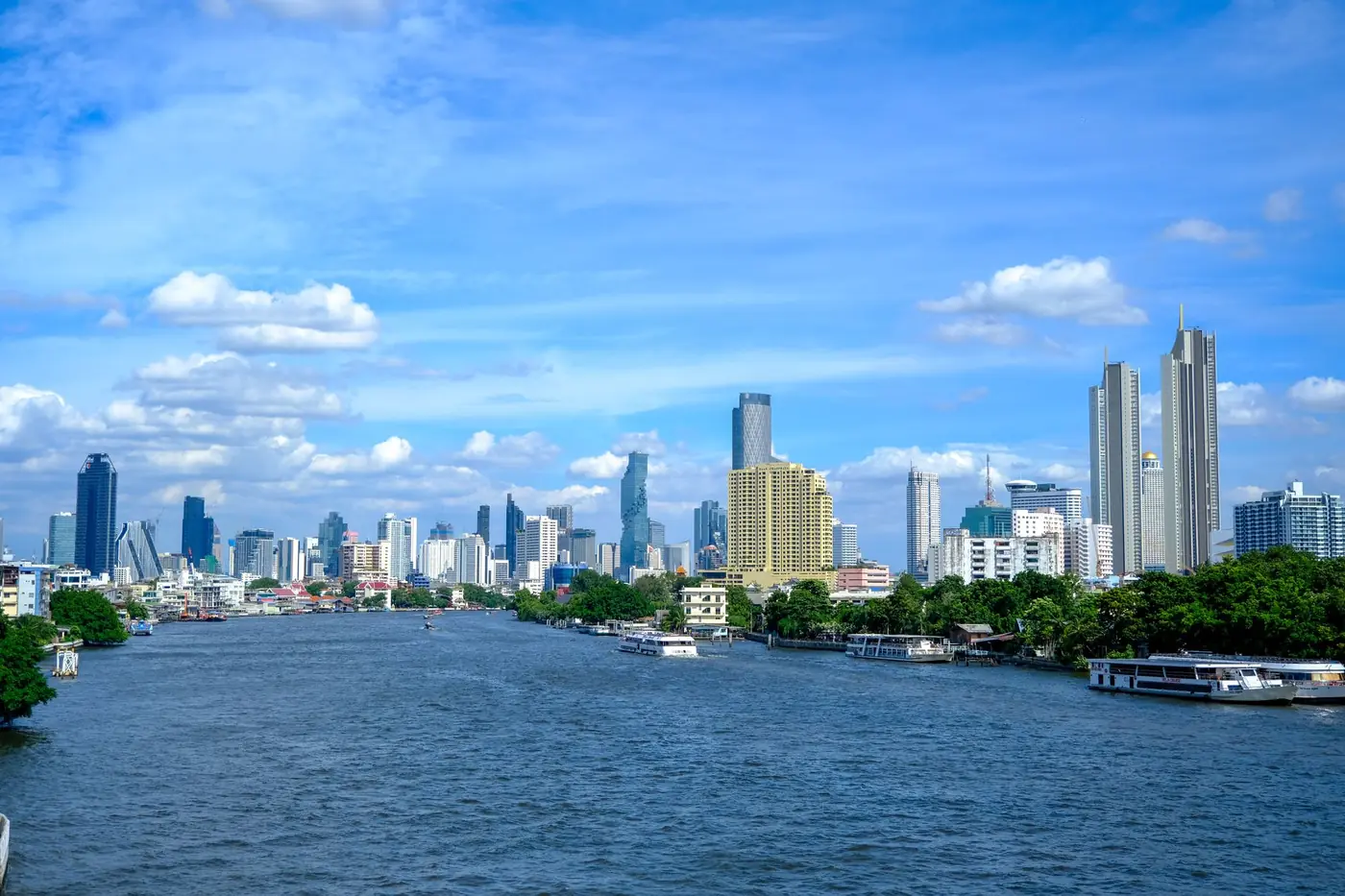
Bangkok: Riverside & CBD

World-city living, healthcare hubs, direct global connectivity.

Emerging coasts

Khao Lak and the islands: earlier-stage, higher-variance opportunities.

This market may fit you if…

  • You want a lifestyle base you will genuinely use
  • Your income or assets plausibly fit a long-stay or LTR category
  • You accept that the visa track and the property track are separate

This market may not fit you if…

  • You expect property purchase alone to produce residency, it does not
  • You need EU or Schengen orientation: look at Cyprus or Greece instead
  • You are uncomfortable with leasehold/quota structures without legal guidance

The process in this market

  1. Goal & eligibility call

  2. Shortlist

  3. Developer introduction

  4. Legal review

  5. Reservation

  6. Due diligence

  7. Purchase

  8. Residency application coordination

  9. Handover

Frequently asked questions

Can foreigners own property in Thailand?

Foreigners can own condominium units freehold, subject to the 49 percent foreign quota per building set by the Thai Condominium Act. Land and villas are normally held on leasehold structures instead. The quota position of a specific building has to be confirmed before reservation, not after.

Does buying property in Thailand give you a visa?

No. Property ownership alone does not create a right to stay. Thailand operates separate long-stay routes, including the LTR programme and the Thailand Privilege Card, which carry their own financial and personal criteria. We keep the property track and the visa track coordinated but strictly separate.

What rental yields are realistic in Bangkok?

Gross yields of roughly 5 to 7 percent are reported in prime Bangkok locations, per Knight Frank Thailand. Resort markets are seasonal, so an annual figure that assumes high-season occupancy year-round will not hold.

What does prime Bangkok property cost?

Prime Bangkok condominium stock runs at roughly THB 150,000 to 350,000 per square metre according to CBRE Thailand, with prime segments growing around 3 to 6 percent annually per the Bank of Thailand and CBRE.

How is money transferred for a Thai purchase?

Purchase funds are transferred from abroad and converted through a licensed Thai bank, which issues the Foreign Exchange Transaction form needed for registration at the Land Office. Getting this documentation right at the time of transfer matters, because it is difficult to reconstruct later.

Can I get residency automatically by buying property?

No. Buying property never guarantees residency. Eligibility depends on your nationality, family situation, source of funds, the current program rules and a formal application reviewed by the authorities. We structure the real estate side; licensed legal partners assess eligibility.

Can my family be included?

In many programs spouses and dependent children can be included, but the definitions, age limits and documentation requirements differ by country and change over time. This must be confirmed by a legal partner against the current rules for your specific family situation.

Is rental income guaranteed?

No. Any rental figures are projections, not guarantees. Actual income depends on market conditions, seasonality, management quality and regulation. We help you assess rental realism, we never promise returns.

Can I resell the property?

Generally yes, though some programs tie residency status to continued ownership, and resale liquidity varies by location and asset type. Exit logic is one of our core project filters, we discuss it before you buy, not after.

Do I need to live in the country full time?

Physical presence requirements differ significantly between programs, some require minimal presence, others more. This directly affects which market fits your life, and it must be verified against current rules for your situation.

Who checks legal eligibility?

Licensed immigration and legal professionals in the relevant jurisdiction. We are not an immigration law firm and do not provide legal advice, we coordinate the process and connect you with vetted legal partners where required.

Get a private view on whether Thailand fits your residency and property goals.